.png)
Mechanical watches: Craftsmanship, value and prestige
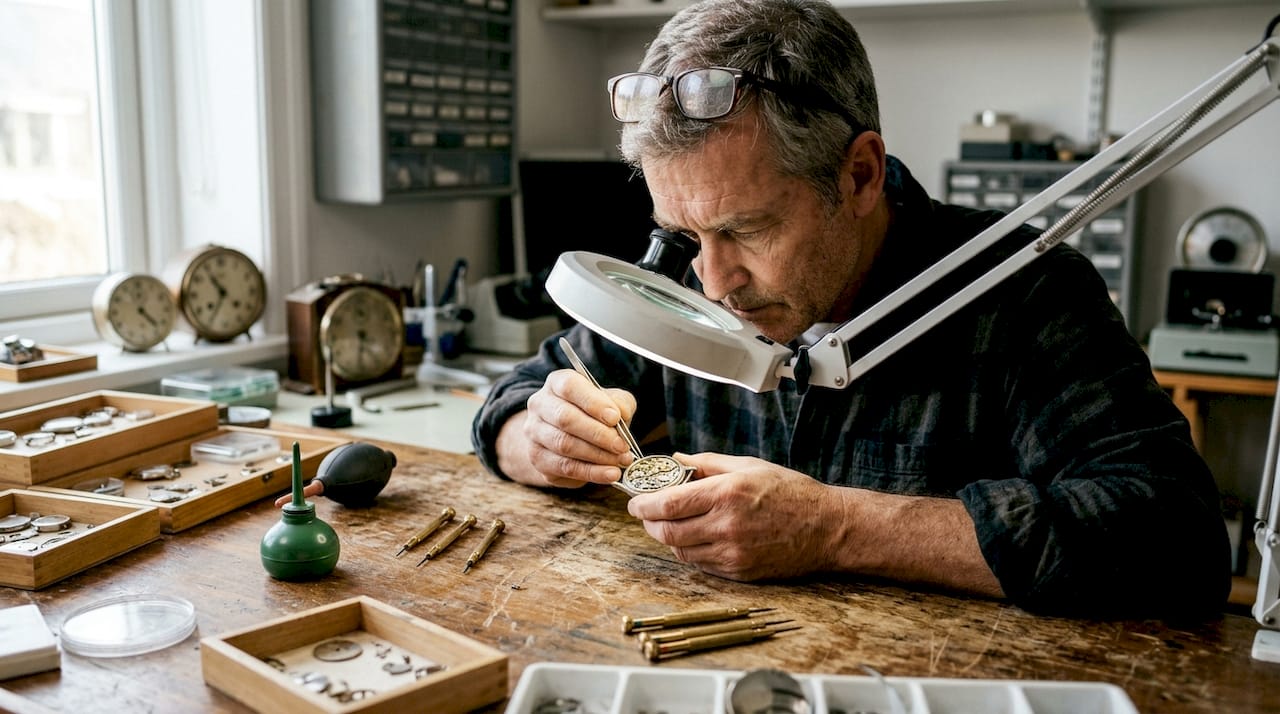
Many assume quartz technology delivers the ultimate watch experience, prioritising accuracy and convenience above all else. Yet mechanical watches command premium prices and inspire devoted collectors worldwide. The truth is that mechanical timepieces offer something quartz cannot replicate: hand-assembled artistry, centuries of heritage, and investment potential that transforms a watch from mere timekeeping tool into a tangible asset. For collectors who value craftsmanship and lasting worth, mechanical watches represent the pinnacle of horological achievement.
Table of Contents
Key Takeaways
Point | Details |
Masterful craftsmanship | Mechanical watches showcase intricate engineering and hand-finishing prized by collectors. |
Prestige and heritage | Owning a mechanical watch connects you with legendary brands and centuries-old artistry. |
Investment potential | Mechanical watches can diversify portfolios when you focus on reputable brands and model rarity. |
Unique ownership experience | The ritual of winding and maintaining a mechanical watch enhances its sentimental and social value. |
Longevity with care | Expert maintenance ensures mechanical watches can be treasured for generations. |
Mechanical watches vs quartz: The engineering distinction
Now that we’ve set the scene, let’s examine the essential differences between mechanical and quartz movements. Mechanical watches feature intricate hand-assembled movements with hundreds of components including mainsprings, gears, and balance wheels, showcasing superior craftsmanship absent in quartz. Each mechanical movement requires skilled watchmakers to assemble, adjust, and regulate dozens of tiny parts working in harmony. The mainspring stores energy, the gear train transmits it, and the escapement regulates release through the balance wheel’s oscillations.
Quartz movements operate on entirely different principles. A battery sends current through a quartz crystal, causing it to vibrate at precise frequencies. These vibrations drive a stepping motor that moves the hands. Quartz movements have fewer than 10 moving parts vs. 100+ in mechanical, making mechanical harder to produce but prized for engineering complexity. This fundamental difference explains why quartz watches can be mass-produced whilst mechanical pieces demand artisanal expertise.
Feature | Mechanical | Quartz |
Components | 100+ hand-assembled parts | Fewer than 10 parts |
Power source | Mainspring (manual or automatic) | Battery |
Production | Artisanal craftsmanship | Mass manufacturing |
Prestige | High collector value | Practical tool |
Maintenance | Regular servicing required | Minimal upkeep |
The engineering appeal of mechanical watches extends beyond mere function:
Visible craftsmanship through exhibition casebacks reveals intricate finishing
Sweeping seconds hand creates fluid motion versus quartz’s ticking jumps
No battery replacements needed, only periodic servicing every 3-5 years
Automatic movements wind themselves through wrist motion, eliminating manual winding
Each piece carries unique characteristics from hand assembly
Brands like Cartier pioneered innovations that elevated mechanical watchmaking into an art form. Independent watchmakers such as Kari Voutilainen continue pushing boundaries with hand-finished movements that command six-figure prices. Quartz offers practicality, but mechanical movements deliver engineering theatre that captivates enthusiasts.
Pro Tip: When examining a mechanical watch, request to see the movement through the caseback. Look for hand-polished bevels, Geneva stripes, and perlage decoration, all indicators of superior craftsmanship that justify premium pricing.
Craftsmanship and heritage in mechanical watchmaking
Having established the technical differences, let’s explore the artistry and legacy that define mechanical horology. Mechanical watchmakers function as artists, not just engineers. They spend years mastering techniques passed down through generations, learning to hand-polish tiny components to mirror finishes and decorate bridges with traditional patterns. This dedication to craft creates timepieces that transcend mere function.
Heritage brands carry centuries-old traditions that inform every design decision. Patek Philippe, founded in 1839, maintains archives of every watch ever produced. Audemars Piguet still operates from its original 1875 workshop in Le Brassus. These companies preserve techniques that would otherwise vanish, training new generations in arts like hand-engraving and enamel work. Each watch becomes a vessel carrying forward horological history.
Expert watchmakers emphasise hand-finishing, golden ratio proportions, and restoration techniques preserving authenticity, elevating mechanical to horological art. Master craftsmen spend weeks finishing a single movement, bevelling edges at precise angles, applying Geneva stripes in perfectly parallel lines, and polishing screw heads until they gleam. This labour-intensive process cannot be replicated by machines, making each mechanical watch inherently unique.
“The beauty of mechanical watchmaking lies not in perfection, but in the human touch evident in every component. When you examine a hand-finished movement under magnification, you see the craftsman’s dedication in each polished surface and decorated bridge. This connection between maker and wearer creates emotional bonds that quartz movements simply cannot forge.”
Iconic mechanical watchmaking features that collectors prize:
Côtes de Genève: parallel wave patterns decorating bridges and rotors
Perlage: circular graining applied to plates creating textured surfaces
Anglage: hand-bevelled edges polished to mirror finishes at precise angles
Blued screws: heat-treated steel screws turned deep blue through controlled oxidation
Hand-engraved balance cocks: artistic flourishes unique to each watchmaker
Pro Tip: Research brands with proven restoration records before purchasing vintage mechanical watches. Companies like Cartier maintain extensive archives and offer factory restoration services that preserve authenticity whilst ensuring proper function for generations.
The experience and prestige of owning a mechanical watch
Beyond the making, owning a mechanical watch creates an experience unmatched by quartz alternatives. The winding ritual, sweeping seconds, and prestige dominate luxury collector markets. Manual-wind watches require daily interaction, creating a meditative routine that connects owner to timepiece. You feel the mainspring’s resistance, hear the gentle click of the crown, and witness the seconds hand spring to life. This tactile engagement transforms timekeeping into a personal ritual.

Prestige follows naturally from rarity and craftsmanship. Fellow collectors immediately recognise significant pieces, sparking conversations and mutual appreciation. Wearing a mechanical watch signals values beyond mere punctuality: appreciation for artistry, respect for tradition, and understanding of horological complexity. These watches open doors in collector circles and establish credibility amongst enthusiasts.
The journey of owning a mechanical watch unfolds in stages:
Initial acquisition: Research, authentication, and the thrill of securing a coveted piece
Daily ritual: Winding or wearing to keep the movement running, creating routine connection
Appreciation: Discovering subtle details like hand-finishing and complications over time
Maintenance: Building relationships with trusted watchmakers for regular servicing
Legacy planning: Considering the watch’s future as a family heirloom or investment asset
However, mechanical watches demand consideration of practical limitations. Mechanical movements are vulnerable to shocks and magnets, whilst quartz proves more durable for daily use, but lacks ‘soul’ and collectibility. Strong magnetic fields from speakers, phone cases, or security scanners can disrupt the balance spring’s oscillations, affecting accuracy. Physical impacts can damage delicate pivots and jewels. These vulnerabilities require mindful wearing habits.
Pro Tip: Establish a care routine that protects your mechanical watch’s value and function. Store pieces away from magnetic sources, avoid wearing during high-impact activities, and follow proper maintenance protocols including regular servicing every 3-5 years to ensure longevity.
Investment value: Mechanical watches as portfolio assets
For many collectors, mechanical watches aren’t just art—they’re assets that offer financial benefits in today’s portfolios. Investment data shows mechanical luxury watches diversify portfolios with low stock correlation, but select blue-chip models and brands for optimal returns. Unlike traditional securities, watches provide tangible assets you can wear and enjoy whilst they potentially appreciate.
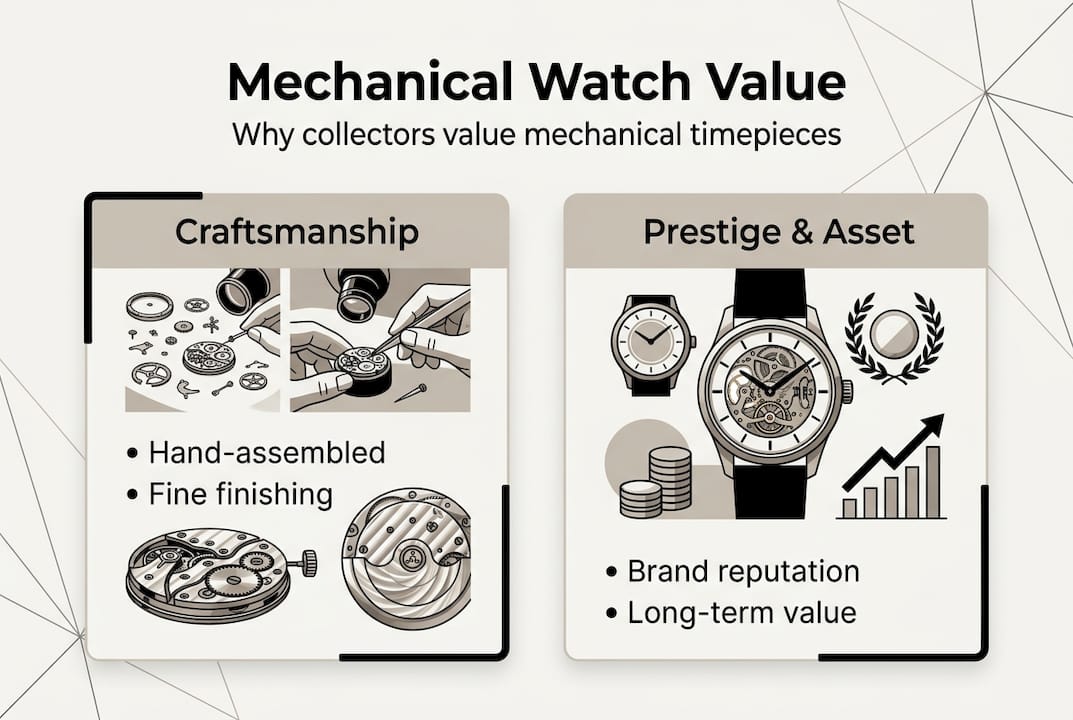
Several factors determine a mechanical watch’s investment potential. Brand reputation matters most, with established names like Rolex, Patek Philippe, and Audemars Piguet commanding consistent demand. Rarity drives value, whether from limited production numbers, discontinued models, or unique complications. Provenance adds premium when watches carry documented histories or celebrity ownership. Condition proves critical, as original parts, boxes, and papers significantly impact resale values.
Asset class | Average annual return | Volatility | Liquidity | Correlation to stocks |
Blue-chip watches | 5-8% | Moderate | Medium | Low (0.2-0.3) |
Stocks (S&P 500) | 10% | High | High | 1.0 |
Bonds | 3-5% | Low | High | Negative |
Property | 4-6% | Low | Low | Moderate (0.5) |
Smart mechanical watch investing requires discipline:
Do focus on established brands with proven track records and strong secondary markets
Do prioritise condition, seeking pieces with original parts, boxes, and documentation
Do research market trends using auction results and professional valuations
Don’t chase hype around trendy models that may not sustain long-term value
Don’t overlook the importance of brand reputation in determining resale potential
Don’t neglect proper insurance and secure sale processes when divesting
Mechanical watches offer portfolio diversification benefits that traditional assets cannot match. Their low correlation to stock markets means they often maintain value during equity downturns. Physical scarcity prevents inflation of supply, unlike fiat currencies. Global demand from emerging markets creates international liquidity. These characteristics make mechanical watches compelling alternative investments for sophisticated collectors.
Care, maintenance, and longevity of mechanical timepieces
Maximising your mechanical watch’s value comes down to expert maintenance and thoughtful care. Mechanical watches last generations with proper servicing, becoming heirlooms that carry family history forward. The key lies in understanding these timepieces’ needs and establishing relationships with qualified watchmakers who can preserve their integrity.
Mechanical accuracy typically ranges from ±10 seconds daily, with COSC-certified chronometers achieving tighter tolerances. Quartz movements perform 20 times better in pure accuracy terms, but high-end mechanical calibres like Omega’s Co-Axial approach quartz precision through innovative escapement designs. This accuracy trade-off represents a conscious choice: collectors accept slight time variance in exchange for mechanical artistry.
Essential care routines protect your investment:
Regular wearing: Automatic watches benefit from daily wear to maintain lubrication distribution
Proper storage: Use watch winders for automatics or wind manual pieces every 2-3 days
Avoid extremes: Keep watches away from strong magnets, extreme temperatures, and water beyond rated depths
Gentle handling: Wind crowns slowly, never force complications, and avoid impacts
Professional servicing: Schedule complete overhauls every 3-5 years with qualified watchmakers
Common pitfalls that damage mechanical watches include overwinding manual movements, adjusting date complications near midnight when gears engage, and exposing watches to magnetic fields from electronics. These mistakes can bend delicate components or disrupt regulation, requiring costly repairs. Prevention through education saves both money and heartache.
Pro Tip: Establish servicing intervals based on your watch’s age and usage. Vintage pieces may need more frequent attention, whilst modern movements with synthetic lubricants can extend service intervals. Consult trusted watchmakers who specialise in your brand, and maintain detailed service records that enhance resale value. Follow preservation best practices and prepare properly when considering sale.
Explore, invest, and maintain with Horology Kings
To take your passion for mechanical horology further, here’s how Horology Kings can support your journey. Whether you’re seeking a specific reference, require expert servicing, or want to liquidate pieces from your collection, we provide the specialised knowledge and discreet service that serious collectors demand.

Our sourcing service leverages an extensive network of trusted dealers and private collectors to locate rare mechanical watches that rarely appear on public markets. We handle authentication, negotiate fair pricing, and ensure secure transactions with full documentation. From discontinued Patek Philippe complications to limited-edition Audemars Piguet pieces, we find watches that match your specific criteria and investment goals.
Maintaining mechanical watches requires expertise that preserves both function and value. Our watch repair and servicing connects you with master watchmakers who understand the nuances of luxury movements. We coordinate complete overhauls, regulate timing, replace worn components with genuine parts, and document all work to maintain provenance. This attention to detail ensures your mechanical watches perform flawlessly whilst retaining maximum resale value for future generations.
Frequently asked questions
Are mechanical watches a good investment in 2026?
Mechanical luxury watches diversify portfolios with low stock correlation, but focus on blue-chip brands like Rolex and Patek Philippe for optimal returns. Choose pieces with proven track records and strong secondary markets.
Do mechanical watches require more maintenance than quartz?
Yes, mechanical watches need regular servicing every 3-5 years to maintain performance and value, whilst quartz movements require only occasional battery replacements. This maintenance preserves the intricate hand-assembled movements.
What makes mechanical watches more collectible than quartz?
Expert watchmakers emphasise craftsmanship, golden ratio proportions, and restoration techniques that elevate mechanical watches to horological art. Hand-finished movements, heritage, and prestige create lasting collector appeal.
How accurate are mechanical watches compared to quartz?
Mechanical accuracy averages ±10 seconds daily, with COSC chronometers achieving tighter tolerances. Quartz performs 20 times better, but high-end mechanical calibres like Omega Co-Axial approach quartz precision through innovative engineering.
Can mechanical watches last for generations?
With proper care and expert servicing, mechanical watches are built to last centuries and be handed down as family heirlooms. Regular maintenance preserves both function and value across generations.
Recommended
Comments