.png)
Watch maintenance tips for keeping your luxury timepiece flawless
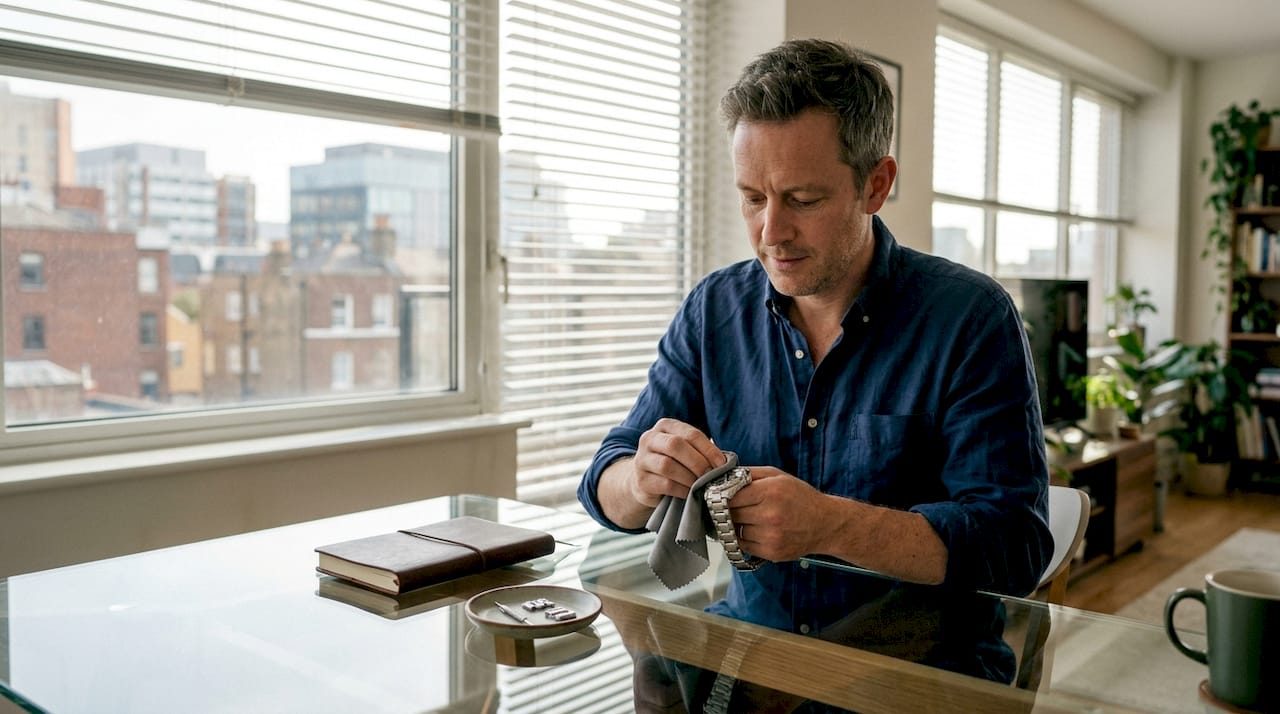
A single missed service appointment or one careless storage decision can quietly strip thousands of pounds from the value of a cherished Rolex or Patek Philippe. Luxury watches are not merely accessories; they are precision instruments, financial assets, and in many cases, heirlooms. Regular servicing is essential for preserving the integrity and value of a fine watch, yet many collectors underestimate just how much daily habits matter. This article walks you through everything you need to know, from foundational care principles to professional servicing schedules, so your collection stays in peak condition for decades to come.
Table of Contents
Key Takeaways
Point | Details |
Service regularly | Professional servicing every three to five years is essential for luxury watches. |
Store properly | Correct storage prevents dust, moisture, and accidental damage, preserving value. |
Avoid shortcuts | Never fit non-genuine parts or neglect expert repairs to ensure authenticity and reliability. |
Clean with care | Routine gentle cleaning protects finishes and movement from premature wear. |
Use professionals | Certified watchmakers maintain warranties and the long-term worth of your timepiece. |
Understanding the fundamentals of watch care
Not all watches are created equal, and caring for a Swiss luxury timepiece demands a completely different mindset from wearing a fashion watch. Luxury timepieces require specific care, far beyond what standard wristwatches need, because their movements contain hundreds of micro-engineered components that react to the environment in ways most owners never consider. Understanding what threatens your watch is the first step toward protecting it.
The four main environmental threats to any high-end timepiece are:
Shock and impact: Even a brief knock against a hard surface can displace delicate movement components or crack a crystal.
Moisture and humidity: Water ingress is one of the leading causes of internal corrosion, even in watches rated for water resistance.
Dust and particulates: Fine particles work their way into the movement over time, accelerating wear on gears and jewels.
Magnetism: Exposure to magnetic fields, from phone speakers to laptop clasps, can cause a mechanical movement to run fast, slow, or stop entirely.
The distinction between essential watch care and casual wear is significant. Casual wear means putting the watch on and taking it off. Essential care means actively monitoring its environment, cleaning it regularly, and scheduling professional attention before problems arise. Think of it the way you would a high-performance car: you would not wait for the engine warning light before booking a service.
“A luxury watch is not a passive object. It is a living mechanism that responds to how you treat it every single day.”
For a deeper look at preserving luxury watch value, understanding these fundamentals is non-negotiable.
Routine cleaning: techniques for daily and weekly upkeep
With the core threats identified, the next priority is building a cleaning routine that protects rather than damages your watch. Many collectors are surprised to learn that improper cleaning is one of the most common causes of surface damage on high-end pieces.
Here is a step-by-step approach for safe routine cleaning:
Daily wipe-down: Use a soft, lint-free cloth to remove sweat, oils, and dust from the case and bracelet. This takes thirty seconds and prevents build-up that can degrade finishes over time.
Weekly bracelet clean: For metal bracelets on water-resistant watches, use a soft-bristled toothbrush with lukewarm water and a tiny drop of mild soap. Work gently between the links where grime accumulates.
Crystal care: Wipe the crystal with a microfibre cloth in circular motions. Never use abrasive cloths or household glass cleaners, as these can strip anti-reflective coatings.
Gasket awareness: While cleaning, inspect the crown and pushers for any signs of wear or looseness. A compromised gasket means water resistance is no longer guaranteed.
Drying: Rinse with clean water if you have used soap, then leave the watch to air dry on a clean cloth.
Pro Tip: Air drying is always safer than towel drying for expensive bracelets. Micro-fibres from even the softest towel can catch on bracelet links and cause tiny scratches that accumulate into visible surface wear. Lay the watch flat and let it dry naturally.
When choosing recommended cleaning products for watches, avoid anything containing alcohol, ammonia, or acetone. These chemicals degrade rubber gaskets and can dull polished surfaces permanently.
Storing your timepiece: best practices and common mistakes
Once your watch is clean, how you store it matters enormously. Improper storage, especially in humid or fluctuating temperature zones, can damage a watch’s movement in ways that are expensive to reverse.
Best practices for storing luxury watches include:
Use a dedicated watch box or case with individual cushioned compartments to prevent watches from touching each other.
Control the environment: Store watches away from direct sunlight, radiators, and damp areas. A consistent room temperature between 15°C and 22°C is ideal.
Avoid leather pouches in humid climates: Leather retains moisture and can transfer it directly to the case and crown seals over time.
Keep watches away from electronics: Phones, tablets, and speakers generate magnetic fields that can affect mechanical movements.
Watch winders are popular among automatic watch owners, and they do serve a genuine purpose: keeping the mainspring wound and the lubricants distributed evenly through the movement. However, a poor-quality winder set to the wrong rotation direction or turns-per-day (TPD) setting can over-wind the movement or cause unnecessary wear. Always match the winder settings to your specific calibre’s requirements.
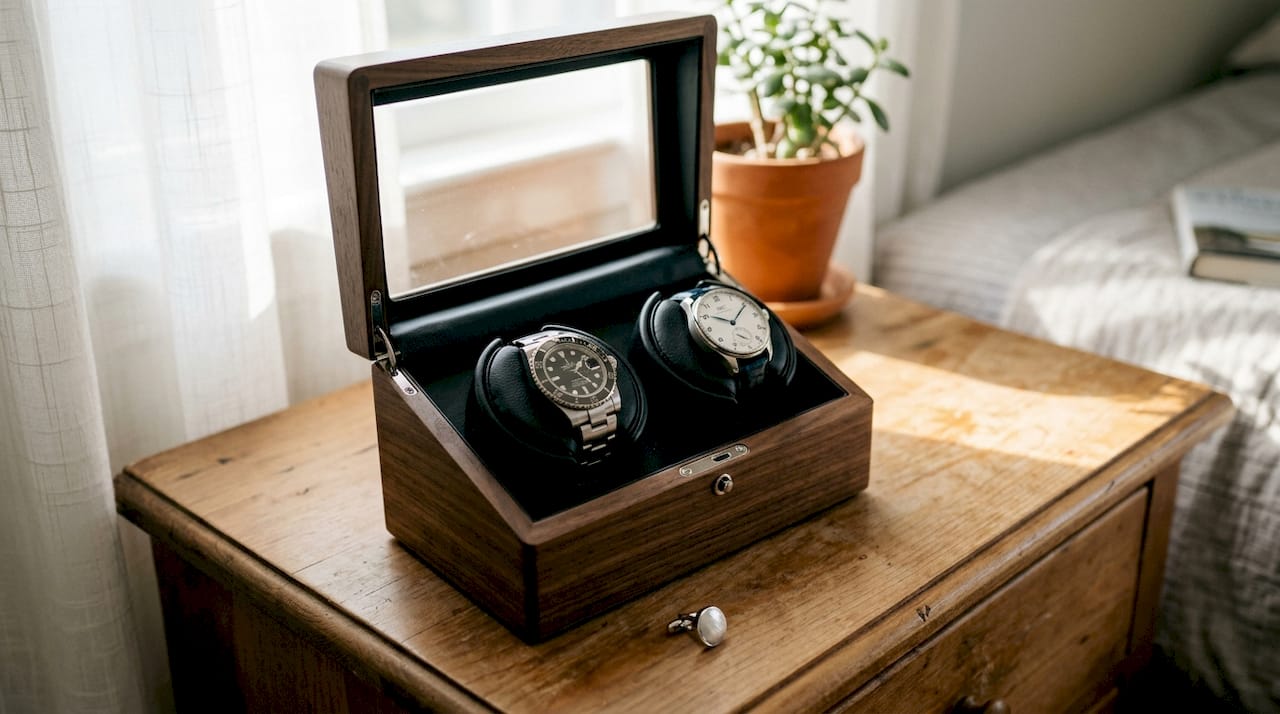
Pro Tip: If your collection is worth more than £10,000 in total, a dedicated home safe and specialist watch insurance are not luxuries; they are necessities. The risks of poor watch storage extend beyond physical damage to theft and accidental loss, neither of which standard home contents policies always cover adequately.
Servicing schedules: how often should you service a luxury watch?
Even with perfect daily care, every mechanical watch eventually needs professional attention. Swiss manufacturers recommend servicing every three to five years, though regular wear and usage can affect this schedule significantly.
Brand | Recommended service interval | Notes |
Rolex | Every 10 years (modern movements) | Older models may need more frequent attention |
Omega | Every 5 to 8 years | Co-Axial movements are more robust |
Patek Philippe | Every 3 to 5 years | Complex complications need closer monitoring |
Audemars Piguet | Every 3 to 5 years | Royal Oak models with integrated bracelets need bracelet service too |
A proper service from an authorised centre includes full movement disassembly, ultrasonic cleaning of components, replacement of worn parts with genuine pieces, re-lubrication, timing adjustment, pressure testing, and case polishing if requested. It is a thorough process that typically takes several weeks.
Signs your watch needs urgent attention include: erratic timekeeping, a rattling sound from the case, a crown that feels loose or gritty, condensation under the crystal, or a date complication that fails to change cleanly at midnight.
DIY servicing is never advisable for high-end pieces. Opening the case without the correct tools and environment risks introducing dust, damaging the movement, and voiding any remaining warranty. Always use professional servicing options from certified specialists.
Avoiding common mistakes luxury watch owners make
Even experienced collectors make avoidable errors. Here is a comparison of the most consequential choice many owners face: genuine parts versus aftermarket alternatives.
Factor | OEM genuine parts | Aftermarket parts |
Performance | Engineered to exact tolerances | Variable quality, often inferior |
Resale value | Maintained or enhanced | Significantly reduced |
Warranty status | Preserved | Typically voided |
Availability | Through authorised centres | Widely available but unverified |
Fitting aftermarket parts drastically reduces a luxury watch’s resale value, and this is a point that cannot be overstated for collectors who view their pieces as investments.
“Magnetism is one of the most underestimated threats to a mechanical movement. A single encounter with a strong magnetic field can render a watch unreliable for months without the owner realising the cause.”
The top five mistakes to avoid are:
Wearing your watch during contact sports or activities involving strong vibration.
Storing watches near magnetic sources such as phone chargers or audio equipment.
Using quick-fix repair shops that lack brand-specific training and genuine parts.
Ignoring minor symptoms like slight timekeeping drift, which often signals a service is overdue.
Fitting non-genuine parts to save money in the short term.
When to consult a professional: repair, authentication, and preservation
There are moments when personal care simply is not enough, and recognising those moments early saves both money and heartache. A certified watchmaker can ensure authenticity and the use of the right replacement parts, which is critical when buying, selling, or restoring a high-value piece.
Situations that require immediate professional attention:
The watch has been submerged beyond its rated depth or exposed to water unexpectedly.
The movement has suffered a significant impact.
The watch has stopped and manual winding does not restart it.
You are purchasing a pre-owned piece and need provenance or authenticity confirmed.
The watch is approaching or has exceeded its recommended service interval.
A step-by-step approach to finding the right professional:
Identify whether the watch is still under manufacturer warranty, as this may dictate where it must be serviced.
Seek out authorised service centres for your specific brand wherever possible.
For independent specialists, verify their credentials and ask specifically about experience with your calibre.
Request a written estimate before any work begins, and confirm that only genuine parts will be used.
Professionals offer full pressure tests, timing adjustments, and brand-specific restoration that no home toolkit can replicate. For authentication and provenance checks, a specialist watch authentication guide is an invaluable starting point before any transaction.
Explore expert watch servicing and sourcing with Horology Kings
Knowing when to call in a professional is half the battle. Finding one you can genuinely trust is the other half.

Horology Kings, based in Hertfordshire, works with serious collectors across the UK to provide certified repair, servicing, and sourcing services for the world’s finest Swiss timepieces. Whether you need professional watch servicing for a Rolex, Patek Philippe, or Audemars Piguet, or you are looking at sourcing a luxury watch with full provenance and genuine parts, the team brings the expertise and discretion that high-value collections demand. Protecting your investment starts with the right partner.
Frequently asked questions
What is the single most important maintenance tip for luxury watches?
Regular professional servicing is the most crucial step, as it preserves both the mechanical integrity and the long-term resale value of your timepiece.
How often should I clean my luxury watch?
A daily wipe with a soft, lint-free cloth and a careful weekly clean are recommended, though you should always follow your specific brand’s guidelines for deeper cleaning.
Does using a watch winder damage automatic watches?
A quality winder used correctly will not damage your watch, provided it is set to the manufacturer’s recommended rotation direction and turns-per-day specification for your specific calibre.
Can I service my luxury watch myself to save money?
DIY servicing almost always voids warranties and risks irreparable damage to delicate components; a certified watchmaker ensures the correct parts are used and the watch’s value is fully protected.
Recommended
Comments