.png)
Horology explained: The art and science of luxury watches
TL;DR:
Horology is the science and art of measuring time through mechanical devices, not just the study of time.
Understanding movement mechanics, certification standards, and innovations enhances collecting and investment decisions.
Deep horological knowledge allows collectors to identify true value and technical mastery beyond brand prestige.
Most people assume horology simply means “the study of time.” It does not. That definition barely scratches the surface of a discipline that spans centuries of mechanical ingenuity, material science, and artistic craft. For serious collectors and investors in the UK, understanding horology at a deeper level is not an academic exercise. It is a practical advantage. Knowing what separates a mediocre movement from a masterpiece, why certain complications command premiums, and how certification standards affect resale value will sharpen every acquisition decision you make. This guide covers horology’s origins, core mechanics, precision standards, and what it all means for building a collection worth owning.
Table of Contents
Key Takeaways
Point | Details |
Horology defined | Horology is the art and science of mechanical timekeeping, covering both technical mastery and creative expression. |
Precision matters | Accurate, certified movements such as COSC-grade chronometers are prized investments for collectors. |
Innovation’s role | Advancements like silicon components and tourbillons drive performance and desirability in luxury timepieces. |
Expertise adds value | Collectors with deep horological insight make smarter acquisitions and maintain watches for lasting worth. |
British resources | Institutes like BHI offer invaluable education, networking and support for those passionate about horology. |
Defining horology: More than the study of time
Now that we have challenged the surface-level definition, let us ground ourselves in what horology actually means for collectors.
The word itself comes from the Greek roots hora (time) and -logy (study of). But etymology only tells part of the story. In practice, horology is the science and art of measuring time through mechanical instruments, primarily clocks and watches. It encompasses design, engineering, manufacture, repair, and the historical development of timekeeping devices.

It is worth distinguishing horology from chronometry. Chronometry covers all forms of time measurement, including biochronometry (biological rhythms) and geochronometry (geological time). Horology is far more specific. It lives in the world of gear trains, escapements, and hand-finished bridges.
Here is a quick breakdown of what falls inside and outside the discipline:
Inside horology: Mechanical watches, pocket watches, carriage clocks, marine chronometers, clock restoration, movement finishing
Outside horology: Atomic clocks (physics domain), sundials (astronomy), digital quartz movements (electronics engineering)
For UK collectors, the British Horological Institute (BHI) is the definitive authority. Founded in 1858, it offers formal qualifications, a renowned museum in Newark, and publishes the Horological Journal, the oldest continuously published horological periodical in the world. If you are serious about developing your expertise, exploring BHI qualifications alongside a structured valuation approach will give you a significant edge.
Discipline | Focus area | Relevance to collectors |
Horology | Mechanical clocks and watches | High |
Chronometry | All time measurement systems | Low to moderate |
Watchmaking | Manufacture and repair | High |
Horometry | Time measurement theory | Academic |
Pro Tip: When assessing a watchmaker’s credentials, ask whether they hold BHI certification. It signals formal training in movement diagnosis, not just surface-level servicing experience.
Core mechanics: What makes luxury watches tick
With this definition in hand, let us look under the dial at the mechanics that elevate a watch from functional to exceptional.
At the heart of every mechanical watch is the Swiss lever escapement, the component responsible for regulating the release of energy from the mainspring through the gear train to the balance wheel. The balance wheel and hairspring oscillate back and forth at a fixed frequency, dividing time into equal increments. Each tick you hear is the escapement locking and unlocking, one beat at a time.
Here is the sequence in order:
The mainspring stores energy when wound
The gear train transmits that energy toward the escapement
The escapement releases energy in controlled increments
The balance wheel and hairspring oscillate to regulate each release
The hands advance in precise, measured steps
The concept of isochronism is critical here. An isochronous oscillator maintains a constant period regardless of changes in amplitude or mainspring torque. In plain terms, a truly isochronous watch keeps the same rate whether it is fully wound or nearly run down. Silicon hairsprings improve antimagnetism and reduce weight, addressing one of the persistent challenges in achieving true isochronism across varying conditions.
Feature | Classic movement | Modern movement |
Hairspring material | Nivarox alloy | Silicon or Silinvar |
Magnetic resistance | Moderate | High |
Servicing interval | 3 to 5 years | Up to 10 years |
Finishing | Hand-decorated | CNC and hand-finished |
Exploring the details of a luxury watch movement reveals just how much engineering goes into what appears to be a simple object. Brands like Rolex, Patek Philippe, and Audemars Piguet invest enormous resources into refining these components. Cartier innovations in movement architecture, for instance, demonstrate how heritage brands continue to push technical boundaries well beyond tradition.
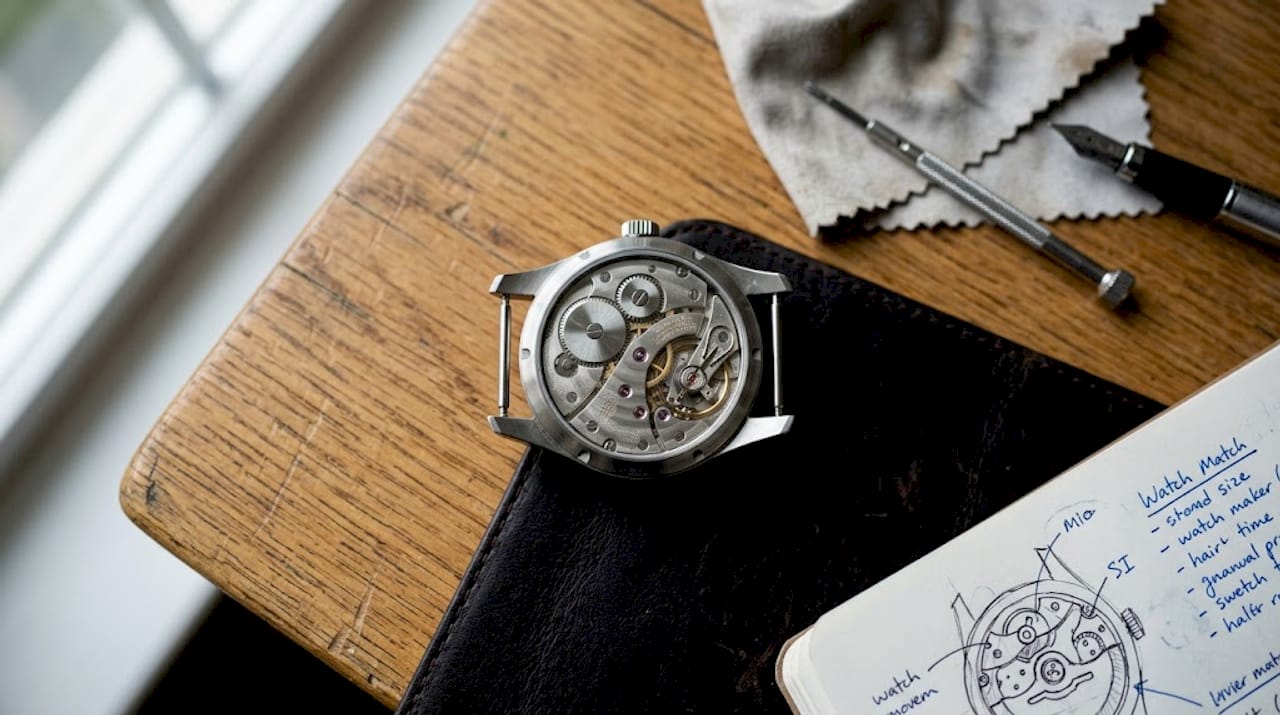
Pro Tip: When examining a movement, look for anglage (bevelled and polished edges on bridges and plates). This hand-finishing technique is time-consuming and costly, and its quality is a reliable indicator of overall manufacture standards.
Precision, certification, and innovation in modern horology
Having explored the mechanics, it is essential to understand how technical excellence is measured and what it means for investors.
The most widely recognised accuracy standard in the industry is COSC certification. The Contrôle Officiel Suisse des Chronomètres tests movements over 16 days across five positions and three temperatures. To earn the chronometer designation, a movement must achieve a deviation of -4/+6 seconds per day. That may sound lenient, but it represents a significant engineering achievement for a purely mechanical device with no electronic regulation.
“A COSC-certified chronometer is not simply a marketing badge. It is documented proof that a movement has passed rigorous independent testing under controlled conditions. For investors, it is one of the most verifiable indicators of technical quality.”
Beyond COSC, several manufactures apply their own, often stricter, in-house standards. Rolex’s Superlative Chronometer certification requires accuracy of -2/+2 seconds per day after casing. Patek Philippe’s Seal demands even broader criteria covering finishing, winding efficiency, and water resistance.
The tourbillon is perhaps horology’s most celebrated complication. Invented by Abraham-Louis Breguet in 1801, it places the escapement and balance wheel in a rotating cage to counteract the effects of gravity on accuracy. Modern tourbillons in brands like Audemars Piguet and A. Lange and Söhne are as much artistic statements as technical solutions.
Key innovations shaping modern horology include:
Silicon and Silinvar components for improved durability and magnetic resistance
Free-sprung balance wheels for greater stability after shock
Co-axial escapements (pioneered by George Daniels, adopted by Omega) for reduced friction
Antimagnetic soft-iron inner cases protecting movements from electromagnetic interference
Isochronism underpins all of these advances. Every innovation listed above ultimately serves the same goal: keeping the oscillator’s period consistent across real-world conditions. For collectors, a watch with documented certification and verifiable technical innovation holds its value far more reliably than one sold on brand recognition alone. Investing in regular servicing preserves both mechanical integrity and investment value, while sound watch maintenance advice can prevent costly degradation between service intervals.
Understanding horology’s value for collectors and investors
Understanding what powers and standardises luxury watches leads naturally to how these factors affect collectability, value, and status.
Haute horology sits at the intersection of precision engineering and fine art. Rarity and craftsmanship drive investment value far more than utility. A Patek Philippe perpetual calendar is not worth six figures because it tells the date accurately. It is worth that because fewer than a handful of craftspeople in the world can assemble it correctly, because the movement took years to develop, and because demand consistently outpaces supply.
Horological literacy changes how you evaluate acquisitions. Rather than relying solely on brand prestige or auction results, you begin to assess:
Movement finishing quality (hand-bevelling, perlage, Geneva stripes)
Complication authenticity and execution (is the tourbillon genuinely functional or decorative?)
Provenance and service history (documented maintenance adds measurable resale value)
Material innovation (silicon components, proprietary alloys, in-house manufacture)
Certification status (COSC, manufacture seals, independent testing)
The BHI offers resources that go well beyond hobbyist interest. Its academic and professional pathways are used by working watchmakers, restorers, and serious collectors who want to understand what they are buying at a technical level.
Using a structured valuation checklist when assessing any acquisition will help you identify genuine value rather than marketing-driven premiums. Similarly, understanding the basics of preserving timepieces protects the mechanical and aesthetic integrity that underpins long-term value.
Pro Tip: Before acquiring any high-value piece, request a full service history. A watch with documented servicing by a certified watchmaker is demonstrably more valuable at resale than one with an unknown maintenance record, regardless of brand.
Why true mastery of horology sets elite collectors apart
Most collectors enter the market through brand recognition. Rolex, Patek Philippe, Audemars Piguet. These names carry weight, and rightly so. But brand loyalty alone does not make you a sophisticated investor. It makes you a consumer.
The collectors we work with who consistently make the strongest acquisitions share one trait: they understand what they are buying at a mechanical level. They can look at a movement and distinguish genuine hand-finishing from machine-applied decoration. They know why a co-axial escapement matters for long-term servicing costs. They recognise when a complication adds horological value versus when it is purely cosmetic.
This knowledge does not come from following auction results. It comes from studying the discipline itself. Understanding mastering watch craftsmanship and the history behind it shifts your perspective from passive buyer to active connoisseur. You begin to spot undervalued pieces that others overlook because they lack the technical context to appreciate them. That is a genuine competitive advantage in a market where the difference between a wise acquisition and an expensive mistake can run to tens of thousands of pounds.
Unlock your next level of horology expertise
Ready to put your knowledge to work and elevate your collecting journey?
At Horology Kings, we work exclusively with collectors and investors who take their watches seriously. Our team brings deep horological knowledge to every transaction, whether you are looking to source a luxury watch from our curated network or need expert watch repair and servicing to protect the integrity and value of your current collection.

We understand that the best decisions come from combining personal expertise with trusted professional guidance. Whether you are acquiring your first six-figure piece or expanding a carefully built portfolio, we are here to support every step with transparency, discretion, and genuine horological authority. Reach out to our team in Hertfordshire to begin the conversation.
Frequently asked questions
What is the difference between horology and chronometry?
Horology specialises in mechanical clocks and watches, while chronometry covers all forms of time measurement, including scientific and biological systems. For collectors, horology is the directly relevant discipline.
Why do collectors value isochronism in luxury watches?
Isochronism ensures a watch keeps accurate time as its power reserve depletes, making it a key measure of technical excellence and long-term investment reliability.
Are modern materials like silicon important in horology?
Yes. Silicon hairsprings improve resistance to magnetism and reduce component weight, enhancing both accuracy and durability in high-end mechanical watches.
How can UK collectors deepen their horology knowledge?
Joining the British Horological Institute and engaging with its Horological Journal, museum, and formal qualifications are among the most effective routes to advanced horological understanding.
What is COSC certification and why does it matter?
COSC certification confirms a movement meets strict accuracy standards, with a permitted deviation of between -4 and +6 seconds per day, providing verifiable technical assurance for collectors and investors alike.
Recommended
Comments