.png)
The luxury watch acquisition process: a UK buyer's guide
TL;DR:
A structured, expert-endorsed acquisition process is essential to avoid counterfeit and overpaying for luxury watches.
Careful diligence at each stage—including provenance verification, serial checks, and independent inspection—protects long-term value and peace of mind.
Selecting a Rolex, Patek Philippe, or Audemars Piguet feels instinctive once you know what you want. The reality of acquiring one safely is far more demanding. Experienced UK collectors and investors treat each purchase as a structured process, not a transaction. From verifying provenance to running serial checks and negotiating price against comparable sales, the steps between desire and delivery are precisely what separates smart acquisitions from expensive mistakes. This guide walks you through every stage, so you arrive at each purchase with the discipline and confidence the world’s finest timepieces demand.
Table of Contents
Key Takeaways
Point | Details |
Structured process is vital | Following a step-by-step acquisition protocol protects your investment and reduces risk. |
Dealer reputation matters most | Acquiring from vetted, reputable dealers offers crucial safeguards, often surpassing brand prestige alone. |
Verification is non-negotiable | Independent validation, including serial checks and escrow, is essential even for high-profile dealers. |
Diligence outperforms desire | Discipline, not just enthusiasm, leads to rewarding purchases and protects against costly mistakes. |
What is the watch acquisition process?
Having addressed the common misconception, let’s clarify what an expert-endorsed watch acquisition process actually involves.
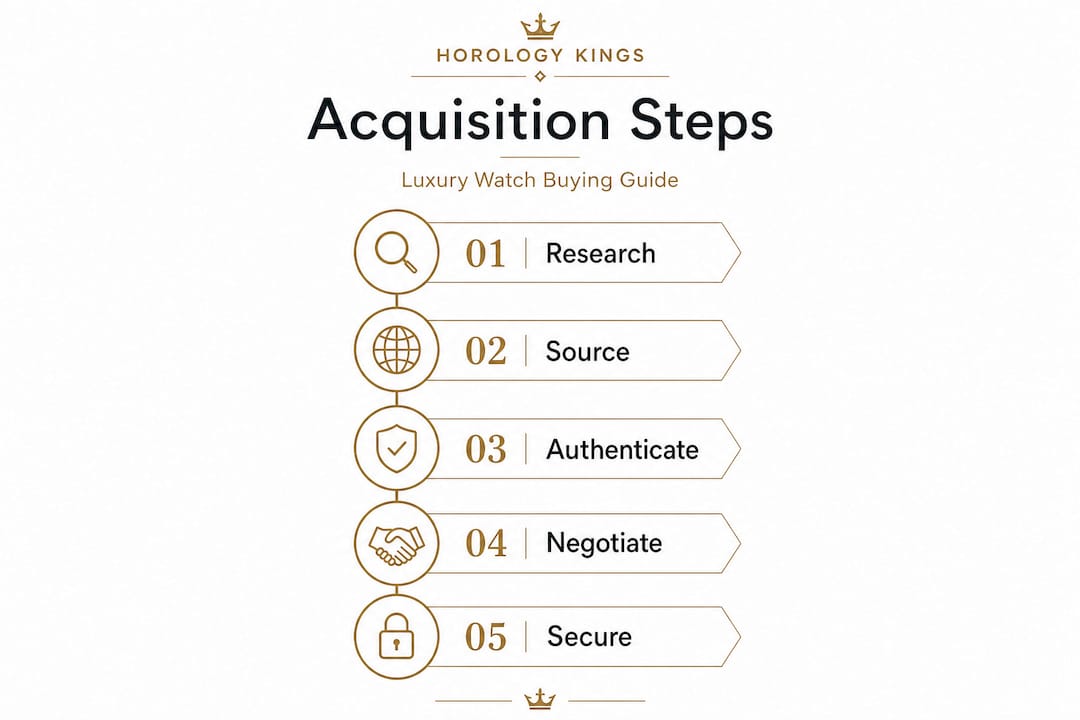
The watch acquisition process is the sequence of verified steps taken between identifying a target timepiece and completing a secure purchase. It is not simply about choosing a model and handing over payment. For serious buyers, it is a workflow designed to protect capital, confirm legitimacy, and ensure long-term satisfaction.
The typical stages unfold in this order:
Research: Identify the specific reference, production year, and condition grade you are targeting. Study comparable sales data to establish a realistic market range.
Source identification: Determine which channel or dealer holds the watch, and assess that seller’s credibility before making contact.
Documentation review: Request the box, papers, service history, and warranty card if applicable. Original documentation materially affects value.
Authenticity validation: Perform serial number checks against the manufacturer’s records and cross-reference against stolen watch registries.
Price sanity check: Compare the asking price against recent auction results and authenticated dealer listings to confirm you are paying within market range.
Transaction and payment: Use secure payment methods. For higher-value pieces, consider escrow arrangements and insured shipping.
Delivery and inspection: Inspect the watch in person or through a trusted independent specialist upon arrival before releasing final payment.
Following safe luxury watch sourcing protocols at each of these stages dramatically reduces the risk of purchasing a counterfeit, receiving a misrepresented piece, or overpaying in a thin market.
“For investors and collectors, the acquisition process commonly includes a price sanity check using comparable sales, plus an authenticity and risk-reduction workflow that may include serial checks, escrow, insured shipping, and inspection on arrival.”
This workflow is not reserved for six-figure pieces. Even a well-priced pre-owned Omega Seamaster or Cartier Santos benefits from the same structured approach. Developing the habit early means you are properly equipped when you eventually pursue rarer, more valuable references. For expert luxury watch buying tips across different price brackets, experienced buyers consistently return to these fundamentals, regardless of how confident they feel about a specific seller.
Deciding where to buy: trusted dealers vs. alternative channels
With the acquisition stages defined, the next decision is choosing where to buy — and understanding what makes a source trustworthy.
Every acquisition channel carries a distinct risk and reward profile. Choosing the right channel for your needs is itself a critical part of the process.
Channel | Vetting standard | Pricing transparency | Risk level | Buyer protections |
Authorised dealers | Very high | Fixed retail pricing | Very low | Manufacturer warranty |
Independent specialist dealers | High | Market-aligned | Low | Dealer guarantee |
Auction houses | High | Published results | Low to medium | Auction house terms |
Online marketplaces | Variable | Negotiable | Medium to high | Platform dependent |
Private sales | Low | Negotiated | High | Minimal |
Understanding reputable UK watch dealers is foundational here. Authorised dealers carry manufacturer backing, but their allocation of in-demand references like the Rolex Submariner or Patek Philippe Nautilus is famously restricted. Independent specialist dealers often hold pre-owned and grey market stock, but their vetting rigour varies considerably. This is why researching the dealer’s reputation is as important as researching the watch itself.
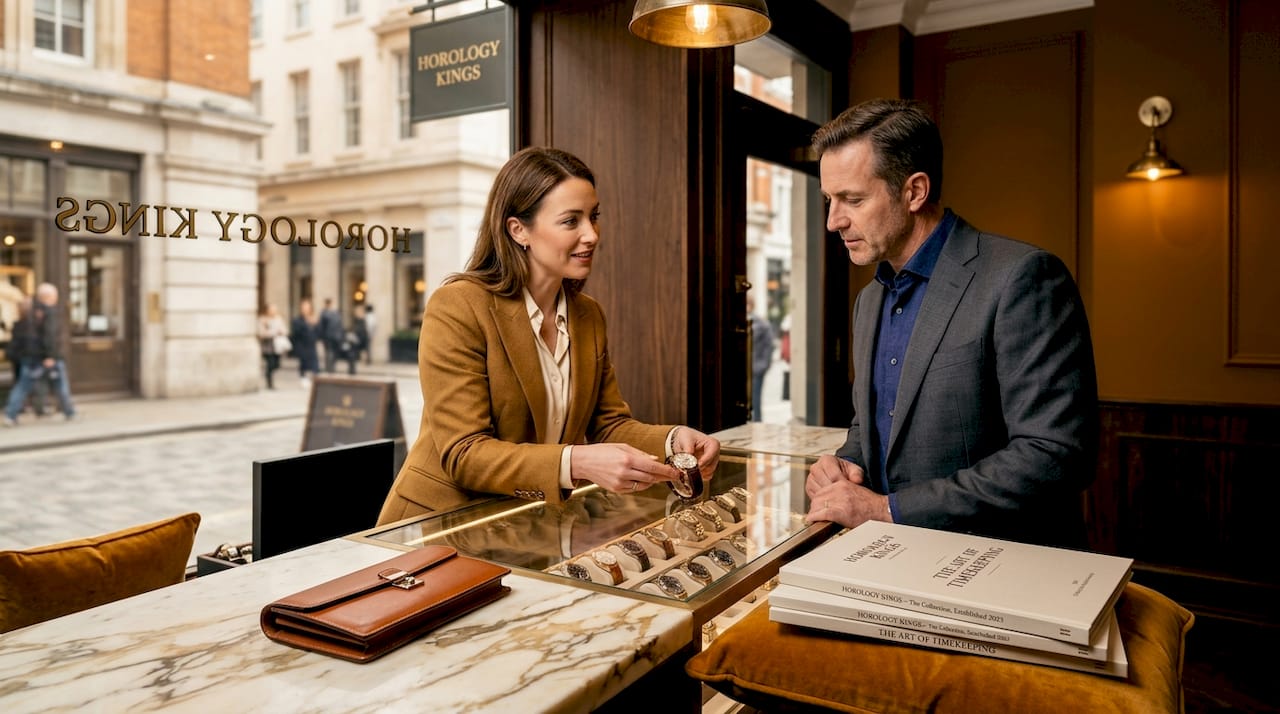
Auction house watch sales occupy an interesting middle ground. Established houses publish results, and their specialists perform baseline authenticity checks. However, the buyer pays a premium (typically 20 to 25 per cent on top of the hammer price), and returns are rarely straightforward. For price discovery and historical data, they are invaluable. As a purchasing channel for first-time investors, they demand careful study.
Private sales and online marketplaces carry the highest risk. Listings can be attractively priced precisely because the seller is avoiding dealer fees, but incomplete documentation and limited recourse are genuine concerns.
As noted by acquisition-channel experts, buyers should “buy the dealer, not the watch.” The reputation, transparency, and after-sale support of the person or business selling the piece matter as much as the piece itself.
Key considerations when assessing any channel:
Does the seller provide original box and papers, or authenticated substitutes?
Is there a documented returns or dispute process?
Can the watch be independently inspected before funds clear?
Are payment methods traceable and recoverable in case of dispute?
Pro Tip: Before committing to any channel, search for recent buyer reviews or community feedback on dedicated forums such as WatchUSeek or the Rolex Forums. Experienced members frequently flag sellers with inconsistent practices or disputed authenticity claims.
Essential checks: authenticity, provenance, and price validation
Once you have chosen your channel, robust due diligence ensures you invest wisely and safely.
The validation workflow is sequential and non-negotiable. Skipping any step, even with a reputable counterparty, introduces avoidable risk.
Serial number check: Every luxury watch carries a unique serial number engraved on the case. Request this number before agreeing to purchase and verify it with the manufacturer’s records where possible.
Stolen-watch registry cross-reference: The Watch Register maintains the UK’s primary database of stolen timepieces. A price sanity check using comparable sales should be paired with a registry search to confirm the watch has a clean history.
Provenance documentation review: Original box, papers, receipts, and service records tell a complete ownership story. Gaps in documentation are not automatic disqualifiers, but they affect both value and verifiability.
Comparable sales review: Use recent auction results from Christie’s, Sotheby’s, or Phillips, alongside authenticated dealer listings, to establish fair market value. Pricing significantly below market is a warning signal, not a bargain.
Escrow for high-value transactions: For watches above £10,000, escrow arrangements through platforms such as Chrono24 or eBay’s Authenticity Guarantee service add a protective layer. Funds are held until the buyer confirms the watch meets the agreed description.
Insured shipping: If the watch must be shipped, insist on fully insured, tracked, and signed-for delivery. Major dealers use specialist couriers such as Malca-Amit or Brinks.
Independent inspection on arrival: Before releasing escrowed funds or accepting delivery as final, arrange for an independent horologist to inspect the movement, case, and components.
Following a thorough luxury watch authentication process is the single most effective way to avoid purchasing a sophisticated counterfeit. The counterfeit watch market has grown considerably more convincing over the past decade, with some replicas passing casual visual inspection. Only a trained eye or specialist equipment reliably distinguishes them.
Using a structured authentication checklist before any payment is released brings discipline to what can otherwise become an emotional purchase. It also gives you a clear record if a dispute arises after the sale.
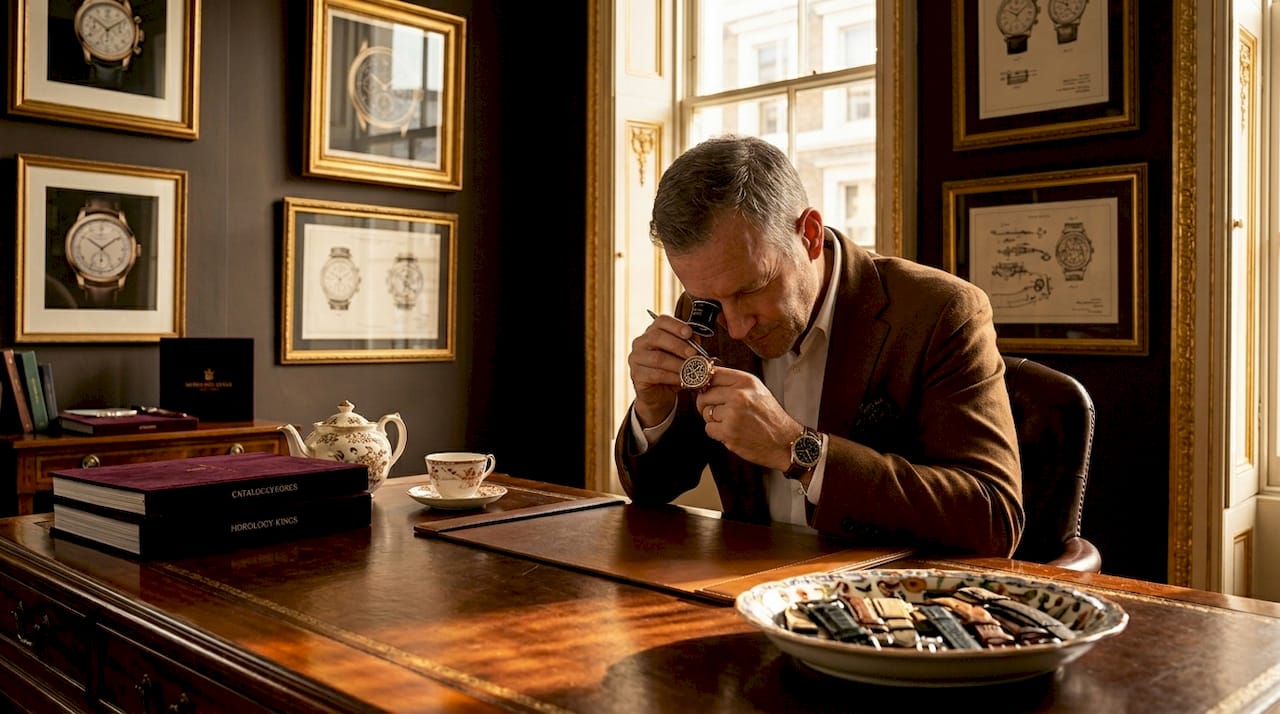
Understanding why authenticity matters in luxury watches extends beyond the immediate transaction. A watch with a confirmed, clean provenance retains and appreciates in value more reliably than one with documentary gaps. For investors with a long-term view, this difference can be significant over five to ten years.
The collector authentication guide approach used by experienced buyers underlines one consistent principle: independent validation is never redundant. Even recognised dealers can make errors, and some issues only surface when a specialist examines the piece directly.
Pro Tip: Always ask for the case back to be removed by a qualified watchmaker before finalising purchase on pre-owned pieces above £5,000. The movement condition, service stamps, and any prior modifications are invisible until you look inside.
Applying the process: expert buyer scenarios
To make the process more concrete, see how it applies in typical UK buying scenarios.
Scenario A: An established collector targeting a vintage Patek Philippe
A seasoned collector in London identifies a 1960s Patek Philippe Calatrava reference through a specialist dealer’s catalogue. Their process is extensive. They commission independent verification of the dial originality (refinished dials significantly reduce value), review all available service records, consult three comparable auction results from the past 24 months, and negotiate a price that reflects the incomplete original strap. The entire process takes six weeks and results in a purchase with full documentation.
Scenario B: A first-time investor acquiring a pre-owned Rolex Submariner
A professional investor new to horology finds a Submariner listed online at a price slightly below market. The channel strategy for investors clearly favours established dealers or auction houses for price discovery and published results. The investor initially considers purchasing directly but, on advice, routes the acquisition through a vetted specialist dealer who provides an authenticity guarantee and a 30-day inspection window. The slight premium paid for this assurance is easily justified.
Buyer type | Channel preference | Key diligence steps | Common errors |
Established collector | Specialist dealer, auction house | Full provenance, dial/movement inspection | Emotional premiums on rare references |
First-time investor | Specialist dealer | Serial check, price benchmarking | Skipping independent authentication |
Opportunistic buyer | Online marketplace | Escrow, registry check | Assuming photos confirm authenticity |
The table above illustrates a crucial point: buyer-side diligence increases as you move toward private and online channels. When institutional vetting is absent, the responsibility shifts entirely to you.
A practical pre-purchase checklist for any buyer:
Confirm serial number and cross-check against registries
Review all available documentation
Verify price against comparable sales from the past 12 months
Arrange escrow or secure payment method
Inspect independently before releasing payment
Understanding safe luxury transactions and knowing how to approach negotiating watch sales are both components of the overall acquisition skill set. A thorough step-by-step luxury purchase approach ensures you do not leave due diligence to chance under time pressure.
Why diligence, not just desire, delivers real watch value
Having surveyed process and case scenarios, let’s reflect on the deeper lesson from seasoned watch experts.
Here is something most guides will not say plainly: the majority of buyer regrets in luxury watches trace back to a single moment of abandoning the process. Not to fraud. Not to misrepresentation. To the buyer deciding, in the heat of the moment, that this particular piece was too good to question, or that this particular dealer was too established to double-check.
That instinct is understandable. When you are handling a beautifully maintained Audemars Piguet Royal Oak or a reference you have pursued for months, the emotional pull is real. But emotion is precisely the condition that sophisticated sellers know how to exploit, and even honest, well-meaning dealers occasionally overlook issues that only emerge under expert scrutiny.
The collectors and investors who build genuinely valuable portfolios share one habit: they have a personal protocol, and they follow it every single time. It does not matter whether they are buying from someone they have known for a decade or a new listing from a well-reviewed platform. The protocol is the same. Documentation reviewed. Serials checked. Price validated. Independent eyes on the movement when the value justifies it.
This is not scepticism for its own sake. It is the discipline that choosing an expert dealer and following through on every check represents. Even well-known UK dealers occasionally sell pieces with undisclosed service history or replaced components. These are not always deliberate misrepresentations, but they affect value. The buyer who finds out six months later, after resale, is the one who skipped the independent inspection.
True value in horology is not found by moving faster than other buyers. It is found by moving more carefully.
Secure your next acquisition with Horology Kings
Ready to approach your next acquisition with greater confidence? Partner with specialists who practise what this guide preaches.
At Horology Kings, every acquisition follows the structured, disciplined process outlined above. We serve collectors and investors across the UK from our Hertfordshire base, handling authentication, provenance review, and price validation as standard. We do not rush transactions, and we do not cut corners.
Whether you are seeking a specific reference or need guidance on where to begin, our source a watch service connects you with a curated network of verified sellers and leverages our expert knowledge to find the exact piece you want. Every transaction is supported by secure UK bank transfer, discreet handling, and transparent communication from first enquiry to final delivery. Visit Horology Kings to explore our current stock or start a sourcing conversation with our team today.
Frequently asked questions
Is buying from an auction house safer than private sales?
Auction houses generally provide more vetting and published results for price discovery, but buyers should still perform their own checks and read the terms of sale carefully before bidding.
What is the biggest risk in online marketplace watch purchases?
Inconsistent or missing authenticity checks and fewer buyer protections increase the risk considerably. The guiding principle from experts remains clear: buy the dealer, not the watch, and online marketplaces frequently cannot satisfy that standard.
How can I check if a luxury watch is genuine before paying?
Always request the serial number, cross-reference it with a stolen-watch registry, and arrange serial checks and independent inspection before releasing any payment, regardless of the channel.
Do all luxury watch dealers in the UK offer authenticity guarantees?
Not all UK dealers provide formal authenticity guarantees. Buyers should investigate each seller’s specific vetting process and supplement it with independent verification from established sources rather than relying on reputation alone.
Recommended
Comments