.png)
Why sell watches through a broker: UK collectors guide
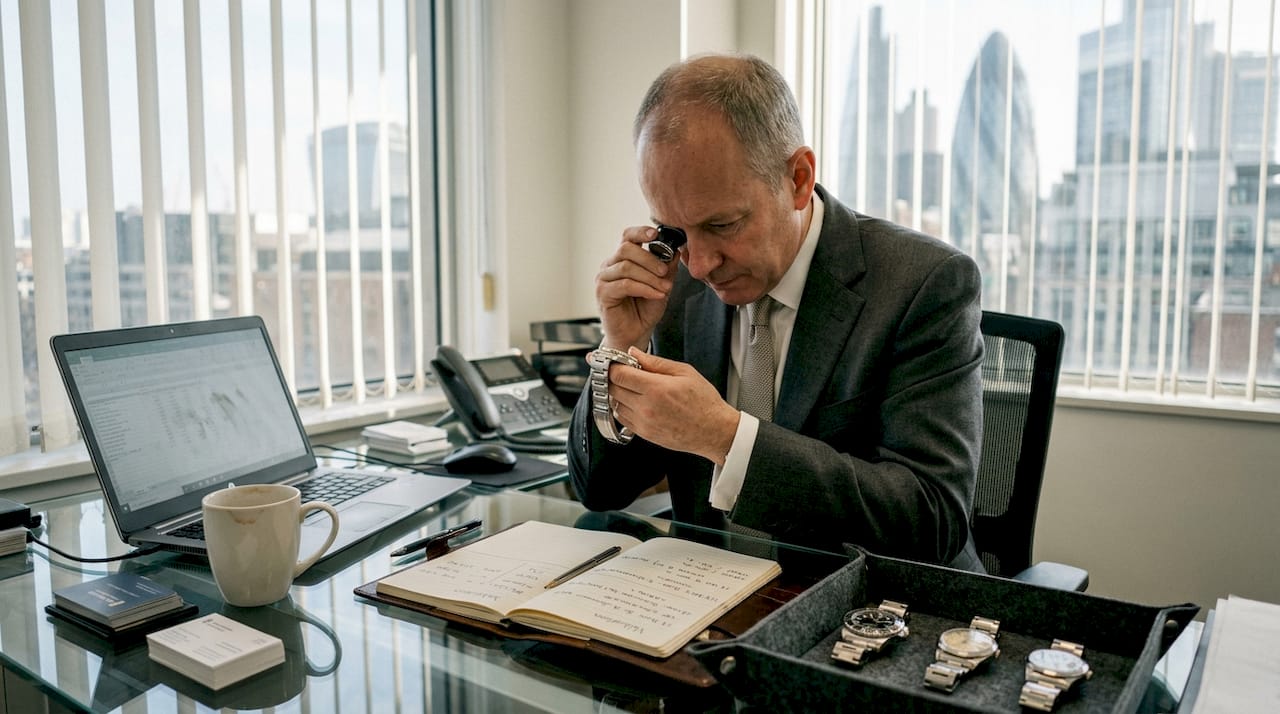
Selling a luxury watch can feel overwhelming. Many UK collectors assume going direct to buyers yields the best returns, but broker partnerships often deliver superior net proceeds and security. This guide explores how brokers maximise your sale outcomes through expert networks, targeted marketing, and proven consignment strategies that consistently outperform private transactions.
Table of Contents
Key Takeaways
Point | Details |
Global buyer access | Brokers provide access to qualified international buyers and handle authentication, marketing and secure transactions. |
Higher net with consignment | Consignment typically yields higher net returns than direct sales, even after commissions, especially for rare or vintage pieces. |
Speed versus price | Understanding the trade off between speed and price helps you select the most suitable selling method. |
Commission clarity | Request detailed commission structures upfront and confirm whether marketing costs, insurance and authentication are included or billed separately. |
How brokers help you achieve higher net returns
Broker consignment consistently outperforms direct sales for luxury watches, even after commission deductions. Consignment nets 10-20% more than instant buyout after 10-15% commission. This counterintuitive outcome stems from brokers’ ability to extract maximum market value through patient, strategic selling.
Consider a Patek Philippe Nautilus 5711 valued at £80,000. Selling directly might yield £75,000 in a rushed private transaction. Through consignment with 12% commission, the broker achieves £88,000, netting you £77,440 after fees. That’s £2,440 more despite paying commission. The mathematics favour consignment when brokers access serious collectors willing to pay premium prices.
Sale method | Gross price | Fees | Net proceeds |
Direct private sale | £75,000 | £0 | £75,000 |
Broker instant buyout | £70,000 | £0 | £70,000 |
Broker consignment | £88,000 | £10,560 | £77,440 |
Several factors drive consignment’s superior returns:
Brokers reach qualified collectors actively seeking specific references
Professional photography and detailed specifications attract premium buyers
Patience allows waiting for optimal market conditions rather than accepting first offers
Established reputations command higher prices than unknown private sellers
Understanding selling your watch online UK strategies helps you evaluate whether consignment aligns with your timeline and financial goals.
Pro Tip: Request detailed commission structures upfront. Some brokers charge tiered rates based on final sale price, whilst others apply flat percentages. Clarify whether marketing costs, insurance, and authentication fees are included or billed separately.
Access to broader and global luxury watch buyer networks
Brokers leverage extensive networks built over decades to connect sellers with qualified international collectors. Multi-platform listing and targeted marketing help brokers reach worldwide collectors who actively seek specific references. This exposure creates competitive bidding scenarios that drive prices upward.
Private sellers typically list on one or two platforms with limited reach. Brokers simultaneously market across:
Specialised luxury watch marketplaces with verified buyer databases
International collector clubs and private networks
Social media channels targeting high-net-worth enthusiasts
Email lists of clients seeking specific brands and references
Industry events and watch fairs with direct collector access
This multi-channel approach dramatically increases visibility amongst serious buyers. A rare Audemars Piguet Royal Oak might attract five enquiries through private listing but generate twenty-five qualified offers through broker networks. More competition translates directly to higher final prices.

Brokers also understand positioning strategy. They know which platforms favour vintage Rolex versus modern Patek Philippe, which collectors seek specific complications, and how to present condition reports that build buyer confidence. Accurate watch valuation combined with targeted marketing ensures your timepiece reaches buyers willing to pay premium prices.
Experienced brokers adjust marketing tactics based on watch characteristics. A pristine full-set Daytona receives different treatment than a vintage Submariner with patina. They emphasise provenance for historically significant pieces, highlight rarity for limited editions, and focus on condition for modern sports models. This nuanced approach maximises appeal to relevant buyer segments.
Effective negotiating watch sales requires understanding buyer psychology and market dynamics. Brokers handle negotiations professionally, maintaining pricing discipline whilst building rapport with potential purchasers. Their detachment prevents emotional decisions that often undermine private sales.
Choosing the right sales method through a broker: direct sale versus consignment
Brokers offer two primary selling formats, each suited to different circumstances and seller priorities. Understanding these options helps you select the approach that best matches your timeline, watch characteristics, and financial objectives.
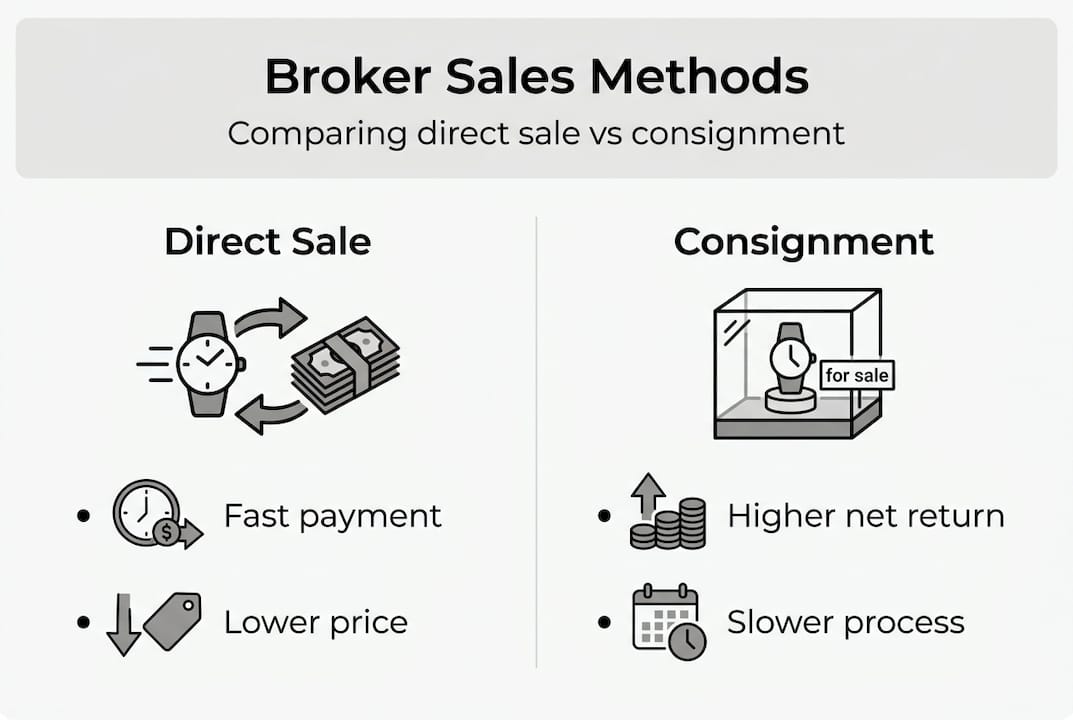
Direct sale means the broker purchases your watch outright for immediate payment. You receive cash quickly but accept a lower price reflecting the broker’s need for profit margin and inventory risk. Consignment involves the broker marketing your watch on your behalf, taking commission only after successful sale. This patient approach typically yields higher net proceeds.
Factor | Direct sale to broker | Consignment |
Payment speed | Immediate | 2-6 months |
Net proceeds | 15-25% below market | Near market value |
Seller risk | None | Watch remains yours |
Best for | Urgent cash, common models | Rare pieces, patient sellers |
Commission | Built into offer | 8-15% of sale price |
Direct sale suits urgent cash needs but yields lower prices; consignment is better for collectible watches if patient. Dealer consignment margins average 8-12% in UK secondary market, covering VAT and fees.
Consider these seller profiles when choosing your method:
Choose direct sale if you need funds within days, own common references with predictable values, or prefer simplicity over maximum returns
Select consignment for rare or vintage pieces, when market timing matters, if you can wait several months, or when seeking absolute maximum value
Hybrid approaches work for collections: sell common pieces directly whilst consigning rare models
Watch condition and market demand also influence optimal selling methods. Pristine full-set modern Rolex sports models sell quickly through either channel. Vintage pieces with patina or uncommon complications benefit from consignment’s patient, targeted marketing to specialist collectors.
Accurate watch valuation forms the foundation for choosing between methods. Understanding current market prices helps you evaluate whether direct sale offers represent fair value or whether consignment’s potential upside justifies waiting.
Reputable watch dealers provide transparent pricing for both options. Request written offers for direct purchase alongside projected consignment prices based on recent comparable sales. This data-driven approach removes guesswork from your decision.
Pro Tip: Review consignment agreements carefully before signing. Clarify minimum acceptable prices, contract duration, early withdrawal terms, insurance coverage, and whether you retain ownership throughout the selling period. Quality brokers welcome these discussions and provide clear documentation.
Special considerations: engraved, vintage, and rare watches
Certain watch categories require specialised broker expertise for optimal selling outcomes. Engravings, age, rarity, and provenance dramatically affect both valuation and ideal sales channels. Understanding these nuances prevents costly mistakes.
Engraved watches often lose value; rare and vintage watches perform better at auction or consignment despite fees. Personal engravings typically reduce resale value by 10-30% because they limit buyer appeal. However, historically significant engravings or celebrity provenance can increase value substantially.
Brokers navigate these complexities through:
Authentication expertise for vintage pieces with aftermarket modifications
Provenance research that establishes historical significance and ownership history
Condition assessment that distinguishes desirable patina from damage requiring restoration
Network access to specialist collectors seeking specific references or complications
Strategic channel selection matching watch characteristics to buyer preferences
Vintage Rolex sports models with tropical dials, ghost bezels, or rare dial variations command premium prices from knowledgeable collectors. Brokers with vintage expertise recognise these details and target marketing accordingly. Generic platforms often miss these nuances, resulting in undervalued sales.
Rare limited editions and discontinued references benefit enormously from patient consignment. A Patek Philippe perpetual calendar in platinum might sit unsold on general marketplaces but attract multiple serious offers through specialist broker networks. The right buyer makes all the difference.
Engravings require honest disclosure and realistic pricing expectations. Brokers help determine whether removal is advisable or whether targeting collectors who value personalisation offers better outcomes. Some buyers appreciate engraved presentation watches from corporate gifts or military service.
Expert trading high-end watches involves understanding market segments and buyer psychology. Vintage collectors prioritise originality and patina. Modern watch investors seek pristine condition and complete documentation. Brokers tailor presentations to appeal to relevant audiences.
When selling watches UK, specialised brokers provide access to international collectors willing to pay premium prices for specific references. This global reach proves essential for rare timepieces with limited domestic demand.
Explore selling your luxury watch with Horology Kings
Navigating luxury watch sales requires expertise, market knowledge, and access to serious collectors. Horology Kings specialises in buying, selling, and sourcing premium timepieces from Rolex, Patek Philippe, Audemars Piguet, and other prestigious Swiss manufacturers. Our Hertfordshire-based team provides transparent valuations, secure transactions, and personalised service tailored to UK collectors.
Whether you’re considering direct sale or consignment, our experts guide you through every decision. We offer competitive instant purchase prices for common references and sophisticated consignment services for rare collectibles. Our source a watch service also helps you find specific timepieces through our international network.
Pro Tip: After selling, consider professional watch repair and servicing for any remaining pieces in your collection. Maintaining optimal condition preserves value and ensures your timepieces perform reliably for years ahead.
Frequently asked questions about selling watches through a broker
What fees and commissions should I expect when selling through a broker?
Broker commissions typically range from 8-15% of final sale price for consignment services. Direct purchases involve no commission but result in lower offers as brokers build profit margin into their purchase price. Always request detailed fee breakdowns including marketing costs, insurance, and authentication charges before proceeding.
How long does the consignment process usually take?
Consignment timelines vary from two weeks to six months depending on watch rarity, market conditions, and pricing strategy. Common Rolex sports models often sell within 4-8 weeks. Rare vintage pieces or complicated timepieces may require 3-6 months to find the right collector. Patient sellers typically achieve better prices.
Can a broker help if my watch has engravings or damage?
Reputable brokers handle engraved and damaged watches regularly. They provide honest condition assessments and realistic pricing expectations. Some engravings reduce value significantly, whilst others add historical interest. Brokers advise whether restoration makes financial sense or whether targeting specific collector segments offers better outcomes. Transparency about condition builds buyer confidence.
Is selling through a broker more secure than private sales?
Broker transactions offer substantially better security than private sales. Established brokers verify buyer identities, handle secure payments through UK bank transfers, provide insurance during consignment, and manage authentication to prevent disputes. Private sales expose you to fraud risks, payment defaults, and personal safety concerns during meetings. Professional intermediaries eliminate these vulnerabilities.
How do brokers determine the value of a luxury watch?
Brokers analyse recent comparable sales, current market demand, condition, completeness of documentation, and service history. They consider brand strength, reference rarity, and broader economic factors affecting luxury goods. Experienced valuers recognise details that impact pricing like dial variations, bracelet types, and box/paper completeness. Professional selling second-hand watches safely requires accurate market knowledge and honest condition assessment.
Recommended
Comments